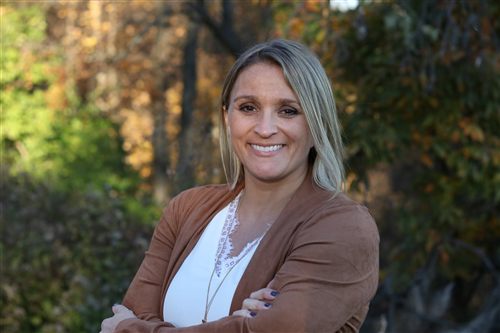
Theresa is a productivity coach, which means I did not have to sit across from her and explain that systems matter.
She already knew that. Her whole business is built around helping people use their time better, make cleaner decisions, and stop letting the wrong things eat up their calendar. So when Theresa first came into my world, the problem was not that she needed to be convinced that structure was valuable.
The problem was that it is a whole lot harder to see the systems inside your own business when you are the one standing in the middle of it.
You cannot read the label from inside the jar, and Theresa's business had the same kind of sneaky backend friction that so many capable business owners deal with. She was serving clients, creating content, thinking about outreach, working on podcast pieces, managing admin, and trying to keep the business moving, but the things that would actually help her grow kept getting pushed behind the work that felt more urgent.
That is the frustrating part.
When you are good at your work, people assume you must have your own version of it perfectly handled, but every business owner knows there is a huge difference between knowing what should happen and having the space, support, and structure to make it happen inside your own business. Theresa could help other people see where their time was leaking, but she still needed outside eyes on the places where her own time and energy were getting swallowed by the day-to-day.
AI was the doorway into the work, because when she first joined, AI felt big, loud, and very much like someone had dumped the contents of an entire warehouse into the middle of the floor and said, "Have fun."
Theresa described it as a "massive nebulous twist called AI," and honestly, that is probably one of the most accurate descriptions I have ever heard. She was not against using it. She just needed it to stop feeling like one more enormous thing she had to figure out by herself.
So we gave it structure.
Instead of treating AI like a pile of random tools, we connected it to the systems she already needed in her business. We built custom bots around her brand, voice, offers, content, outreach, and business support, and we used them to make the work she was already doing faster, cleaner, and easier to repeat.
That is where the time started coming back.
At one point, I asked Theresa what she was doing with the five or six hours a week she was saving, because I wanted to know whether the work was actually creating space in her real life, not just sounding nice on paper. Her answer was so good because she did not say she was using that time to do nothing, although for the record, I fully support a woman staring at a wall in peace if that is what the day requires.
She said she was finally getting to the projects that had been sitting on the back burner, the things she had wanted to work on but could never quite reach because she was always in the weeds of the business.
That is the outcome I care about.
Because saving time is great, but saving time so you can finally build the pieces that help the business grow is even better. Theresa was not just getting faster at admin. She was getting her best energy back for the work that actually mattered, and that changed the way she was able to show up in her own business.
Over time, the work kept layering. She used AI for posts, emails, outreach, podcast messaging, and content repurposing, but she also started seeing how the different parts of the business could connect instead of living as separate efforts. The program helped her streamline, simplify, save time, save money, and get back to the pieces that were actually going to help her business grow.
And then she kept coming back.
That is one of my favorite parts of Theresa's story because she has been through multiple versions of this work with me, and she keeps choosing the next layer because she understands how fast this whole AI world changes. She has no interest in making AI research her second unpaid job, which is wise because she has actual clients to serve and an actual business to run.
She would rather stay close to someone who can filter what is actually useful, teach it in a way that makes sense, and help her apply it without spinning around in every new shiny tool that shows up online.
Theresa has said that the program took AI and made it "structured, direct, purposeful," and that it simplified the whole thing so much. She has also said that I keep the work purposeful and directed, which matters because the goal is not to use AI everywhere just because we can.
The goal is to use it where it actually helps.
That is why Theresa is such a strong bookend for these stories. She proves that the AI-Powered CEO System is not just about getting one quick win, building one bot, or making one dashboard look pretty. It is about building a way of operating that can keep growing with you as your business changes, your capacity changes, and yes, as the AI tools change every five business minutes.
Theresa did not need to be sold on systems. She needed her own systems streamlined, supported, and powered in a way that gave her time and focus back.
And once she felt what that made possible, she kept coming back for more.
Book a call, and let's talk through what's actually happening behind the scenes in your business, where things feel heavier than they should, and what kind of system could help you lead with more clarity.