Christine Hakkola already had a successful business, a growing team, real traction, ClickUp systems, SOPs, and AI tools in motion. The problem was never that she lacked systems. It's that she was moving faster than they could keep up.

I love working with clients who already have a strong brain for strategy, and Christine is absolutely one of those clients.
When we started working together, she already had a successful business, a growing team, real program traction, ClickUp systems, SOPs, AI tools in motion, and a custom client platform in development. She knew where Hakkola Horizons was going, and she had the drive to move quickly.
The challenge was that she was moving so quickly that the systems could not always keep up with her.
You start with one good system, then create another version because the first one was almost right, then add a doc, a task, a template, an AI thread, and a dashboard, until you technically have a system… but you can't find it, trust it, or hand it to your team without explaining the entire backstory.
That was the world Christine was trying to get out of.
Christine's business was already working, which is important. In fact, she had more structure in place than a lot of entrepreneurs do when I meet them.
The issue was that a business with a lot of pieces feels heavy.
Too much still depended on her brain holding the whole thing together: where things lived, how the pieces connected, what had already been started, and what her team needed to know before they could run with it. That gets exhausting, especially when you're trying to grow.
One of the clearest themes that came up in our calls was that Christine is very good at getting the first chunk of a system started. She can see the idea, understand the strategy, and get the first version moving, but the messy middle is where things start to wobble.
She said it herself, and I loved that she could name it that honestly, because that's where the real work starts.
"What I'm really good at is understanding strategy and planning the big-picture thing, and I can get a system 20 or 30 percent built fast. The messy middle is where I lose momentum, and that's exactly where I wanted support."
Saying yes to consulting was a real decision. Christine's plate was already full: a growing membership, a team, a book in progress, and a webinar engine she was actively scaling.
The question wasn't whether support would help. It was whether this was the right container for the season she was in.
So we talked through what she needed and built a custom consulting setup around focused strategy, live systems thinking, and practical support, instead of forcing her into a package that looked good on paper but felt wrong for her actual business.
If you've been around me for longer than three seconds, that's not breaking news. I love Notion, and I'll happily talk about it until someone gently replaces the microphone with a cup of coffee and tells me to sit down.
Christine was not trying to become a Notion person, and that was completely fine. The work was never about convincing her that my tool was better than her tool. It was about helping her see the system underneath the tool, because that's where business owners often get stuck. They think the problem is the platform, so they switch tools, rebuild everything, and six weeks later they have the same mess in a shinier container.
Christine didn't need that. She needed someone who could look at what she already had, understand how her brain was organizing the work, and help her create cleaner paths inside the tools she was already using. That's what we did.
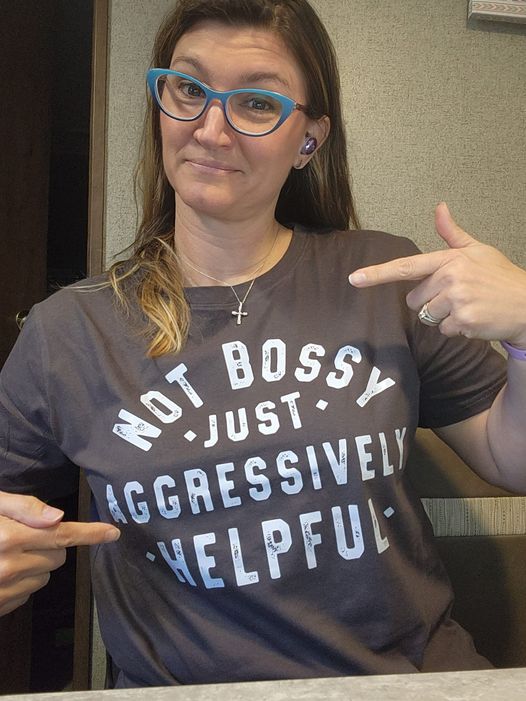
A lot of our work happened live, screen-shared, in the middle of the mess, which is my happy place. Give me a business owner with a pile of almost-finished systems, ten tabs open, and a sentence that starts with "I know I created this somewhere," and I'm ready.
We started with the systems creating the most drag. Her task list had become a storage closet for ideas, reminders, duplicates, and things she already knew she wasn't doing today, so we cleaned it up and turned it back into an action list.
Then we worked on her LinkedIn outreach and webinar funnel, and finally on the webinar process itself, which needed one home instead of scattered pieces.
Reset the task list. We went through it line by line. If she didn't know what a task meant, we deleted it. If it was an idea, it moved to the ideas list. If it was a project pretending to be a task, it moved where it belonged so it could actually be broken down.
Map the outreach and funnel. Christine already had strong messaging instincts and real data from her outreach, so we mapped the sequence clearly: who gets the guide, who gets invited to a call, who's too early, what her team handles manually, and what gets automated.
Build one webinar system. One place for event details, the registration page, promo emails, reminders, follow-up, social posts, DM outreach, Zoom reports, and the debrief numbers, so she could reuse and improve it instead of rebuilding it every month.
Simplify her AI support. Instead of multiple AI helpers creating more places to check, we built one clearer assistant-style workflow for reviewing her calendar, email, tasks, meeting notes, and action items together.
As we talked through her webinar system, Christine realized the real takeaway was having one place where everything lived. That sounds obvious once someone says it, but when you're moving fast, managing a team, building assets, testing webinars, working with partners, and trying to keep revenue moving, it doesn't happen by accident.
The business will absolutely make a mess if you let it. It'll scatter things across your inbox, your task manager, your AI chats, your meeting notes, your Google Drive, your team threads, and that one random doc you named something unhelpful at 11:42 p.m.
For Christine, the shift wasn't about becoming organized for the sake of looking organized. It was about reducing the amount of mental effort required to execute.
Ultimately, AI should reduce the number of tabs open in your brain. If it adds more, we need to have a little chat.
After we worked through her first webinar setup, Christine ran the event and got strong early proof that the funnel had legs.
Indicated interest on LinkedIn
Registered on Zoom
Showed up live
Stayed until the end
Signed up for the program
The revenue is great, but the real result is that the system wasn't a one-time fluke. Christine repeated it, improved it, and turned the webinar into clients again.
That's where things get exciting, because now she doesn't just have a good idea. She has a repeatable growth channel she can keep refining.
Christine is direct, which I appreciate deeply because I'm also not exactly known for tiptoeing through the tulips. So when she tells me things like that, I pay attention. She also called me a "systems queen," which I will obviously be accepting as an official title from this point forward. 👑
"I have worked with her, I have seen how she thinks, and I trust her enough to say something when someone else is considering hiring her."
The stronger proof was what happened outside of our calls. After Christine experienced the work for herself, she endorsed me to someone else who was considering working with me. She wasn't repeating a polished testimonial I handed her. She was speaking from inside the client experience, after watching what it looked like to bring me into the middle of the messy, half-built, moving-too-fast reality of her business.
That kind of endorsement carries weight because it's specific. And it will beat a perfectly polished testimonial box every time.
That would have been a terrible plan. Christine has her own brain, her own tools, her own team, her own business model, and her own way of moving through the world. My job was to help her create enough structure around the way she already works, so the business could move without everything depending on her memory, energy, and constant translation.
That's what good systems do. They don't erase your personality, they support your leadership.
Christine is fast-moving, strategic, high-capacity, and full of ideas, which is a gift. When that kind of founder doesn't have a clean container, the gift can turn into a pile of unfinished brilliance.
And we are not doing that. Not on my watch.
If you recognize Christine's pattern, the almost-finished systems, the brilliant strategy, the messy middle, let's talk about what a system built around how you actually work could look like.
Book a Call